
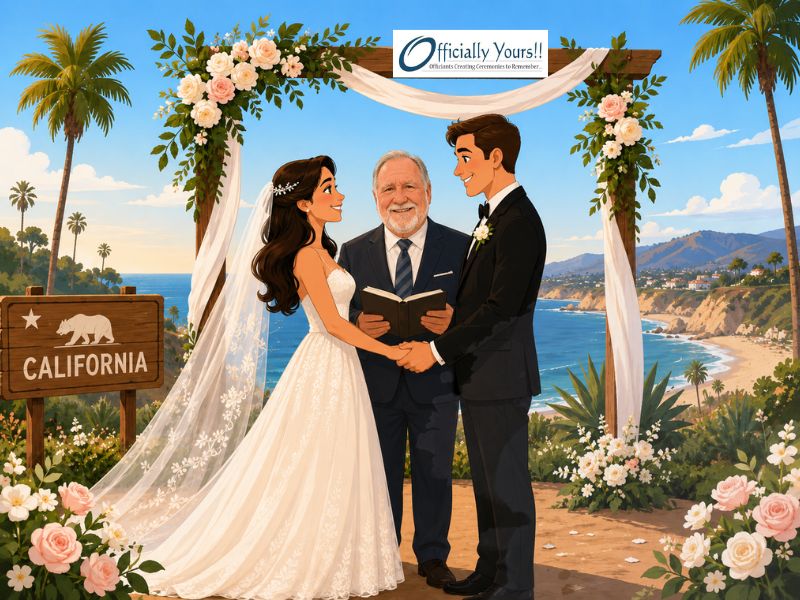
How Do You Legally Marry Someone in California?
If you’re planning to tie the knot in California, understanding the legal steps is crucial. From who can perform the ceremony to the documents you must file, California’s marriage process is straightforward but with specific requirements. This guide covers the essentials and answers common questions, including how do I find a wedding officiant and other practical tips to ensure your marriage is legally recognized.
Introduction: Why Knowing the Legal Steps Matters
Getting married is more than a ceremony, it’s a legal contract that affects taxes, property, and parental rights. In California, the process is designed to be accessible to a wide range of couples, including same-sex couples and those who choose non-traditional ceremonies. By knowing the steps ahead of time, you can avoid delays and enjoy the day with confidence.
Who Can Legally Marry You in California?
California allows a variety of people to perform marriages, depending on the circumstances:
- A ordained or licensed clergy member or a religious representative.
- A judge or magistrate.
- A court-appointed or public official.
- A friend or family member who has been authorized by the County Clerk to perform marriages (this option is temporary and varies by county).
- In some cases, a person who is appointed as a deputy commissioner may be able to officiate.
If you’re unsure who can marry you, contact your local county clerk for the most up-to-date list of eligible officiants in your area.
How Do I Find a Wedding Officiant?
One of the most common questions is how do i find a wedding officiant. Here are practical steps to locate a suitable officiant:
- Start with your preferred ceremony style: religious, secular, or civil. This will help narrow the type of officiant you need.
- Check with your venue. Many California venues have preferred officiants or recommended coordinators who can connect you with officiants who understand the venue’s requirements.
- Ask for recommendations from friends, family, or coworkers who recently married in California.
- Search local directories, wedding planning websites, or social media groups for officiants in your city or county.
- Verify credentials: ensure the officiant is legally authorized to perform marriages in California and can complete the marriage certificate properly.
- Schedule interviews or meetings to discuss the ceremony tone, any vows, and whether you need a civil or religious blessing.
If you’re planning a ceremony outside a traditional venue (beach, park, or private residence), be sure that the officiant is comfortable performing in that setting and understands any necessary permits or county rules.
The Paperwork: What Documents Do You Need?
Before your ceremony, you must obtain and complete essential documents:
- A marriage license: You must apply for a marriage license at the county clerk’s office. Both parties typically need to appear together to apply.
- Identification: Bring government-issued photo IDs (like a driver’s license or passport) and any required birth certificates or divorce decrees if applicable.
- Fee: There is a fee for the license, which varies by county.
- Waiting period: California currently has no statewide waiting period for local residents, but some counties impose a waiting period or other requirements for non-residents or certain circumstances. Check with the local county clerk.
- After the ceremony: The officiant completes the marriage license, including the date, location, and signatures, and files it with the county clerk. You’ll receive a certified copy after processing.
Note: A blood test is no longer required in California.
Residency and Waiting Periods
California does not require residency to obtain a marriage license, and there is no blood test. However, certain counties may have specific processing times or additional requirements for non-residents or military members, so always verify with the county clerk where you plan to marry.
Common Myths About California Marriage
- Myth: You must be a resident of California to marry there. Reality: Non-residents can marry in California as long as they follow the same process and obtain a license.
- Myth: You need a specific religious ceremony to be legally married. Reality: A legal civil ceremony performed by an authorized officiant is all that’s required.
- Myth: A blood test is required. Reality: There is no blood test requirement in California.
Tips for a Smooth Process
- Plan ahead: Start the process at least 4–6 weeks before your date to accommodate potential delays in obtaining the license.
- Bring copies of IDs: Some counties require extra copies for filing.
- Verify name changes: If you plan to change your name, understand the process and timelines after the marriage certificate is filed.
- Confirm officiant jurisdiction: Ensure the officiant is authorized to perform marriages in California and understands county filing requirements.
- Consider a rehearsal: A quick run-through can help ensure the ceremony goes smoothly on the big day.
How Do You Legally Marry Someone in California? – Final Thoughts
Marrying in California is designed to be accessible and flexible, whether you’re choosing a traditional religious ceremony or a contemporary civil rite. By understanding who can officiate, how to find a wedding officiant, and the essential paperwork, you can navigate the process with confidence. Remember to verify with your local county clerk for the most current requirements and timelines, and enjoy the moment as you legally unite with your partner.
If you’re still wondering, how do I find a wedding officiant, start with recommendations from trusted sources, check credentials, and arrange a brief meeting to ensure your expectations align. Your officiant sets the tone for the ceremony, so choosing someone who respects your values and preferences is key to a memorable day.
Contact Officially Yours!! for more wedding tips!
Follow Us!