
When Did Traditional Marriage Begin?
Marriage is one of humanity’s oldest institutions, woven into the social, economic, and religious fabrics of countless cultures. The idea of a “traditional marriage” often conjures images of a long-standing ceremony, a defined gender dynamic, and a clear set of wedding traditions handed down through generations. But the question “when did traditional marriage begin?” invites a nuanced journey through history, law, religion, and cultural practice. In this post, we’ll explore the origins of traditional marriage and how wedding traditions evolved across civilizations.
Introduction: Unpacking the premise of traditional marriage
To understand when traditional marriage began, it helps to define what we mean by tradition in this context. Traditional marriage typically refers to a socially recognized union sanctioned by the community, with established rituals and expectations surrounding roles, legitimacy, inheritance, and offspring. Across eras and regions, wedding traditions have varied dramatically, yet share common functions: creating alliances, securing property, regulating reproduction, and establishing legitimacy for children. By tracing legal frameworks, religious endorsements, and cultural rituals, we can sketch a broad timeline of how traditional marriage emerged and transformed.
The ancient roots: early unions and communal contracts
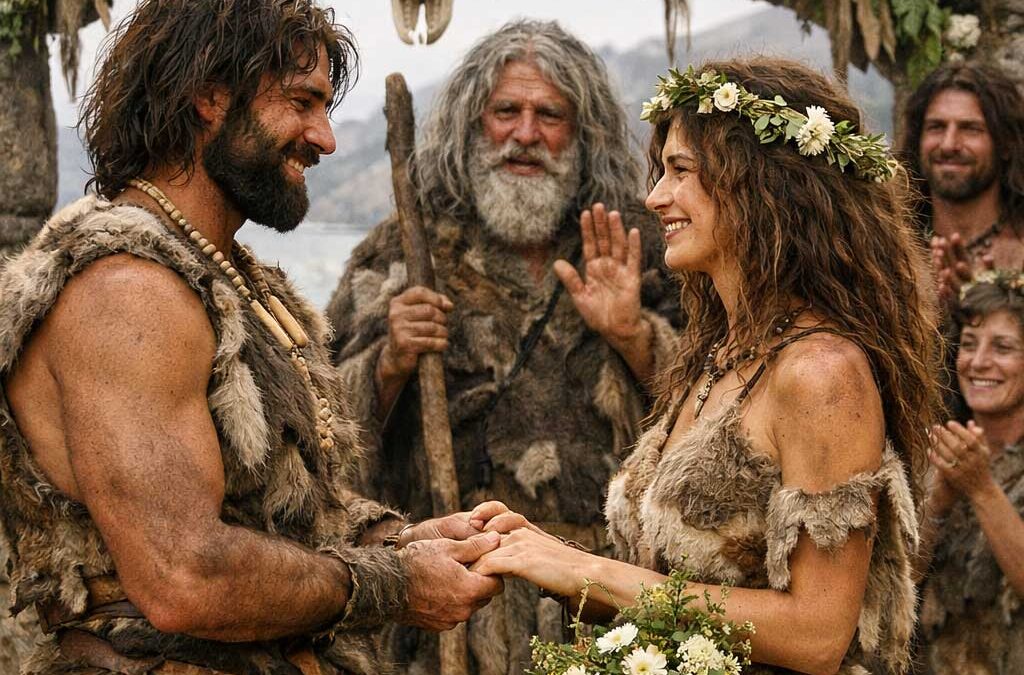
Long before formal weddings, many societies practiced unions that served practical needs, economic security, lineage continuation, and social alliance. In many agrarian communities, marriages bound families together to pool resources, manage property, and ensure succession. These unions were often informal, with the community recognizing the couple’s bond rather than a centralized religious or state authority.
In Mesopotamia, Egypt, and the ancient Near East, early legal codes began to acknowledge marriage, granting spouses certain rights and responsibilities. The Code of Hammurabi, dating to around 1754 BCE, touched on marital duties, dowries, and the legitimacy of offspring, signaling a move toward formalizing marriage within a legal framework. In ancient Greece and Rome, marriage was both a private arrangement and a public, often ceremonial, act that reinforced social status and property arrangements. However, even in classical times, there wasn’t a universal “traditional marriage” model; rather, diverse practices depending on class, religion, and local custom.
Religious influences: marriage as a sacred covenant
Religious traditions have profoundly shaped wedding customs and the concept of marriage as a sacred covenant. In Judaism, marriage (kiddushin) is a binding bond established through ritual and blessing, with a long lineage of wedding customs such as rings, witnesses, and the marriage contract (ketubah). In Christianity, marriage gradually acquired sacramental significance in many denominations, particularly within Catholic and Orthodox traditions. The Church’s influence helped standardize ceremonies, vows, and the social legitimacy of the union.
Islam introduced marriage (nikah) with its own set of practices, including the requirement of a dowry (mahr) and witnesses. Across Hindu, Buddhist, and other religious traditions, wedding rituals, fire ceremonies, circumambulations, vows, and festive rites, became integral to the recognition of marriage and its duties. In these contexts, traditional wedding traditions often functioned as public affirmations of union, interwoven with religious doctrine and community expectations.
The medieval to early modern shift: codification and social ceremony
In medieval Europe, marriage increasingly became a matter of church and state, with the church setting the ritual framework and civil authorities handling legitimacy and property rights. Dowries, dowers, and arranged marriages were common among nobility, while peasant communities preserved customary practices. The wedding ceremony itself grew into a highly codified public event, complete with banns (public notices), feasting, and legal formalities.
The Reformation brought changes in how marriage was perceived and administered. Protestant reformers challenged some Catholic practices, emphasizing scriptural authority and the sanctity of the couple’s consent. Yet the public, communal nature of the ceremony persisted, contributing to the idea of marriage as both a religious and social institution.
Early modern to modern shifts: romance, rights, and evolving traditions
The rise of modern nation-states and evolving ideas about individual rights transformed traditional wedding traditions in several ways:
- Legal reforms expanded the concept of marriage to include broader rights for wives and children, challenging earlier patriarchal norms.
- The companionate model, emphasizing love, mutual respect, and partnership, gained popularity as a counterpoint to arranged marriages.
- Dowries and property arrangements gradually diminished in influence in many societies, even as some traditions around dowries persisted in various forms.
- Weddings became more consumer-oriented and spectacle-driven in some cultures, while remaining intimate and community-centered in others.
Across the 19th and 20th centuries, wedding traditions adapted to social change: women’s suffrage, civil marriage milestones, and increasingly diverse family structures. Yet many communities retained core elements, family involvement, ceremonial vows, and communal celebration, signaling a continuity of tradition even as practices evolved.
A global panorama: diverse threads of wedding traditions
It’s essential to recognize that traditional marriage and wedding traditions did not emerge from a single source or timeline. Different civilizations developed distinct rituals, such as tea ceremonies in East Asia, la boda in Latin cultures, or the exchange of rings in various European and colonial contexts. Each tradition reflects local beliefs about kinship, legitimacy, wealth, and social order. When we speak of “traditional marriage”, we’re often describing a spectrum rather than a monolith.
When Did Traditional Marriage Begin? – Final thoughts: reflecting on the evolution of traditional marriage
The question of when traditional marriage began does not have a single, definitive starting point. Instead, it marks a continuum: early unions gradually formalized through law and religion; religious and cultural rituals codified and ceremonialized the bond; and modern times reinterpreted marriage through rights, romance, and evolving social norms. Today’s wedding traditions continue to adapt, balancing respect for heritage with personal meaning. Understanding this history helps us appreciate how wedding traditions endure while remaining flexible enough to reflect changing values and diverse family structures.
In short, traditional marriage began long ago in multiple places and ways, shaping how communities bond, reward, and recognize lifelong commitments. By exploring legal codes, religious practices, and evolving social norms, we gain a richer picture of how wedding traditions have come to define what many societies consider the cornerstone of family life.
Discover more interesting articles on our main blog page.
Follow Us!